Read scans and complex layouts while retaining the location of every region and the uncertainty around it. The compiler has to recover text and coordinates before anything can be compiled into a world.
Text, scans, and what survives them
Every accepted source is sanitized to an image-only PDF and read by OCR, so a scan is read the same way a born-digital file is. What survives that read into the compile is the page it was read from, the paragraph text and the box that paragraph sat in — after the file has been sanitized to PDF and passed through OCR. A price table arrives as the paragraphs it was printed as, each carrying the box it sat in, so every figure stays readable and locatable while the grid that arranged them is not yet recovered. DOCX, XLSX, PPTX, ODT, ODS and ODP are converted to PDF before anything reads them.
The place, kept
Every region keeps the address of where it was read — in a PDF, the page and the box on it. This is what later lets every compiled fact stay traceable to its exact source location.
Read in the order it was printed
Regions arrive in the order they were read, so a fact attaches to a place in the document rather than to an offset in a blob of text. What the compiler receives is that paragraph and where it sat, rather than typed structure: heading levels, sections and columns wait for a native structure reader. The full list, per format, is the capability manifest.
Confidence travels with the region
Every region carries the read confidence recorded for it in the OCR output, and a failed read opens review rather than passing silently. That confidence is recorded for review; it does not automatically block or approve anything.
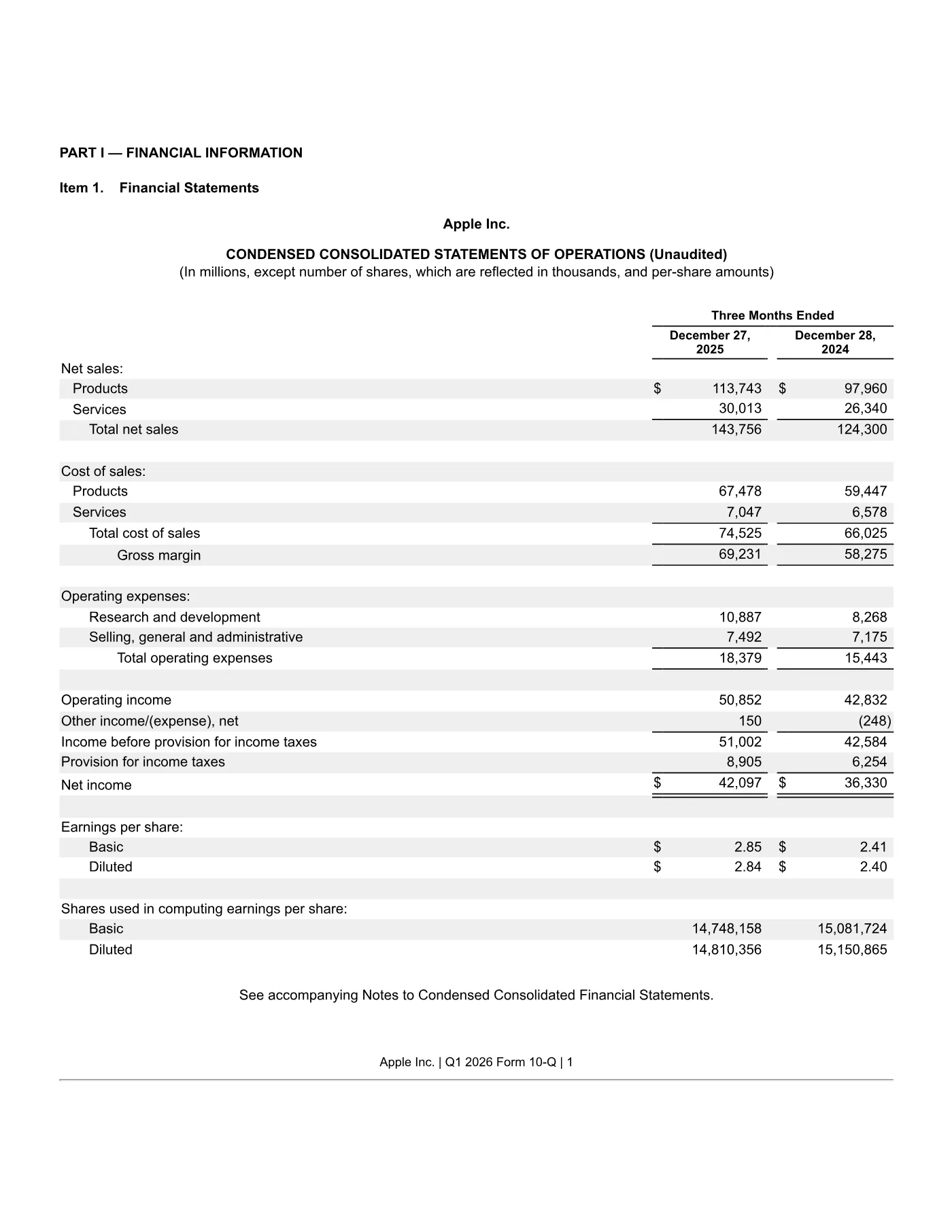
What the read left behind on one page of the public sample World: a box for each region, at the coordinates recorded for it, and the paragraph text each one carries.
Evidence region 1 of 10 on this page
PART I — FINANCIAL INFORMATION Item 1. Financial Statements
p.4 of 30 · bbox 62,116,318,156 (per mille) · sha256:7fe2683c59e0b48f6c112bc17b3900d907f64236c138d1dd32f40d544b1ba89f
apple-2026-q1-10-q-reference.pdf · reference render · page 4 of 30
Every sentence above about what is read comes from the capability manifest TAVONEL validates uploads against — tier, preserved fields and limitations per format, published in full at supported sources. Measurements and methodology are published in the research notes.