Spreadsheet
Sheet, and the cell or range inside it.
A Compiled World is only worth as much as its ability to show its work. Every compiled fact stays traceable to its exact source location. This page is how a compiled result stays bound to the source it came from, and how to check that yourself, without taking our word for it.
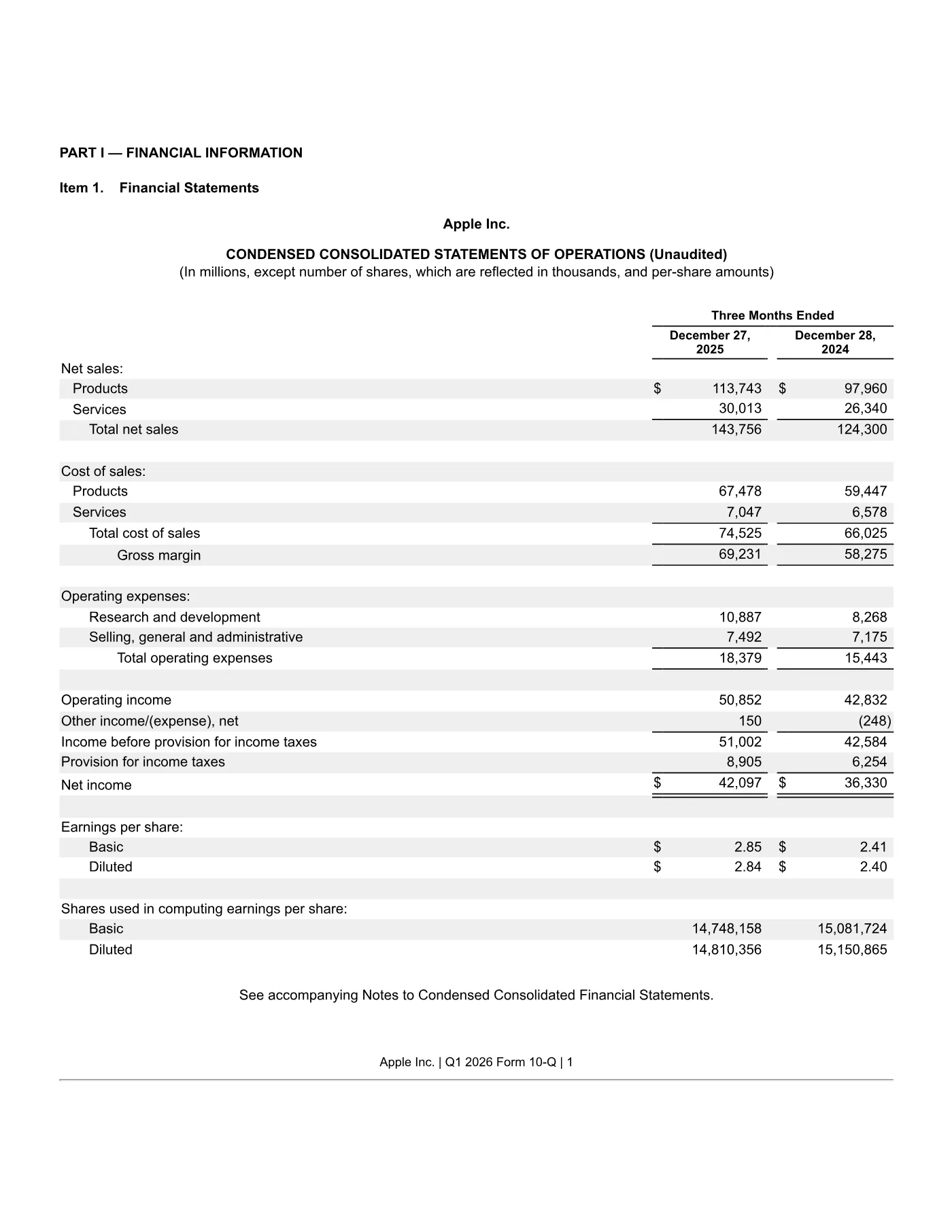
From the public sample World. Each box is a region the compiler recorded, at the coordinates it recorded; the excerpt is the source's own text, and the locator under it is what a result cites.
Evidence region 1 of 10 on this page
PART I — FINANCIAL INFORMATION Item 1. Financial Statementsp.4 of 30 · bbox 62,116,318,156 (per mille) · sha256:7fe2683c59e0b48f6c112bc17b3900d907f64236c138d1dd32f40d544b1ba89f
apple-2026-q1-10-q-reference.pdf · reference render · page 4 of 30
A location is whatever addresses one place inside that kind of source. One of these forms is what TAVONEL reads today; the rest are the shape the evidence contract is built to hold.
Reading today
Page and region on that page.
Every format TAVONEL accepts is read through this one, which is why every row on Sources preserves the page, the paragraph text and the region.
Reader not shipped: none of these seven is read today. They are the locator shapes the evidence contract is defined for, so a format that gains a reader gains a locator that was already specified rather than one invented at the time.
Sheet, and the cell or range inside it.
Slide, and the shape on that slide.
Message, and the attachment or MIME part inside it.
Pointer or path to the node.
Commit, file, and the symbol or line span.
Object, by its GUID.
Timestamp, or frame.
Each source is stored as an immutable object under a content hash. A later revision of the same file is a new version, not an overwrite, so a result can always name the exact bytes it was compiled from.
Reading produces regions, and a qualified claim keeps the region it came from. Every compiled fact stays traceable to its exact source location, which is why opening evidence shows the place in the source rather than a quoted snippet.
Objects, relations and claims belong to a world version. When sources change, the previous version stays intact and readable, so an answer given last month can still be traced to what was true then.
Accepting, rejecting or changing a candidate item writes an append-only record of who decided, when, and on what item. The record states the action taken and nothing beyond it.
An export carries a manifest with a digest for every file, signed on the way out. The public key is published, so a recipient verifies a package without asking us.
A world with an unresolved link is not emitted. Broken knowledge fails visibly instead of arriving looking complete.
Ask a question, or open any object in a Compiled World, and follow its citation.
The evidence record names the source version and the exact location inside it, and opens that location.
Download the signed package: ontology, graph, retrieval corpus, provenance and validation.
Check every file digest against the manifest, and the manifest signature against the published key.
Every measurement behind these claims, with its denominator and its receipt, is in the research notes — including the hypotheses that did not hold.
Also in the trust case: Research notes · Benchmarks · Reproducibility · Research · Trust